Expat Eyes

This blog contains the photographs, observations and reflections of Rena Diana, an educator and writer, during extended stays in the Arabian Gulf, China, and Mongolia.

Archive for the month “February, 2012”

Construction in a Caravan Culture


“We do not live in palaces. We can build new homes by nightfall.”

Tahir Shah, Caliph’s House

“Don’t bother yourself with concrete floors, you can’t take them with you.”

Marguerite van Geldermalsen, Married to a Bedouin
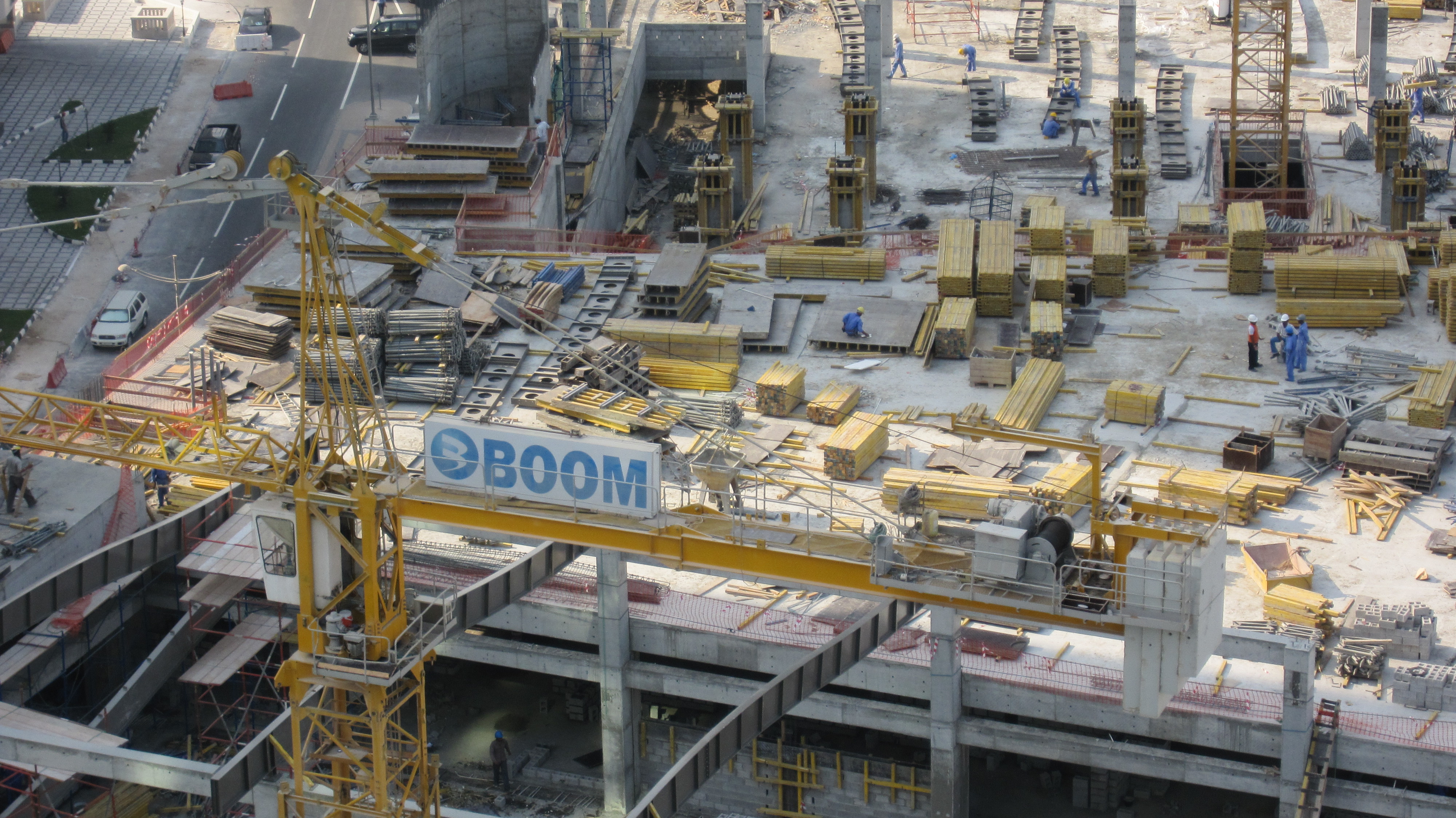
 

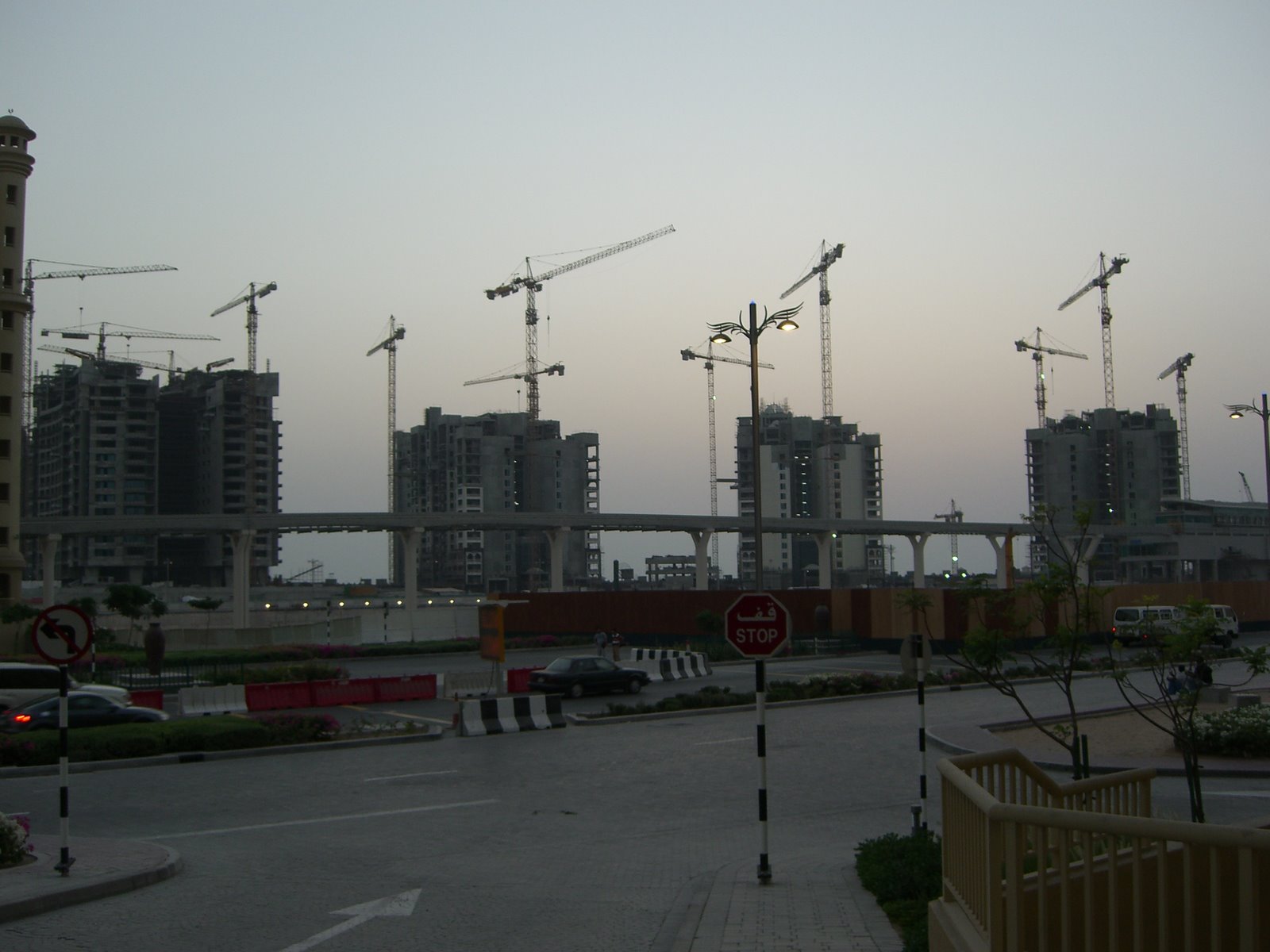
Journal Entry, November 2008, Dubai, Palm Jumeirah: Activity everywhere. Dredging machines. Bulldozers. Dump trucks. Backhoes. Construction vehicles lurch about like gigantic prehistoric creatures.
Caterpillar Serpents writhe through the water sucking up and spitting out sand.  Praying Mantises pick up tiny bits of rock. Monster Mosquitoes circle, buzz, and pierce with their sharp stingers.
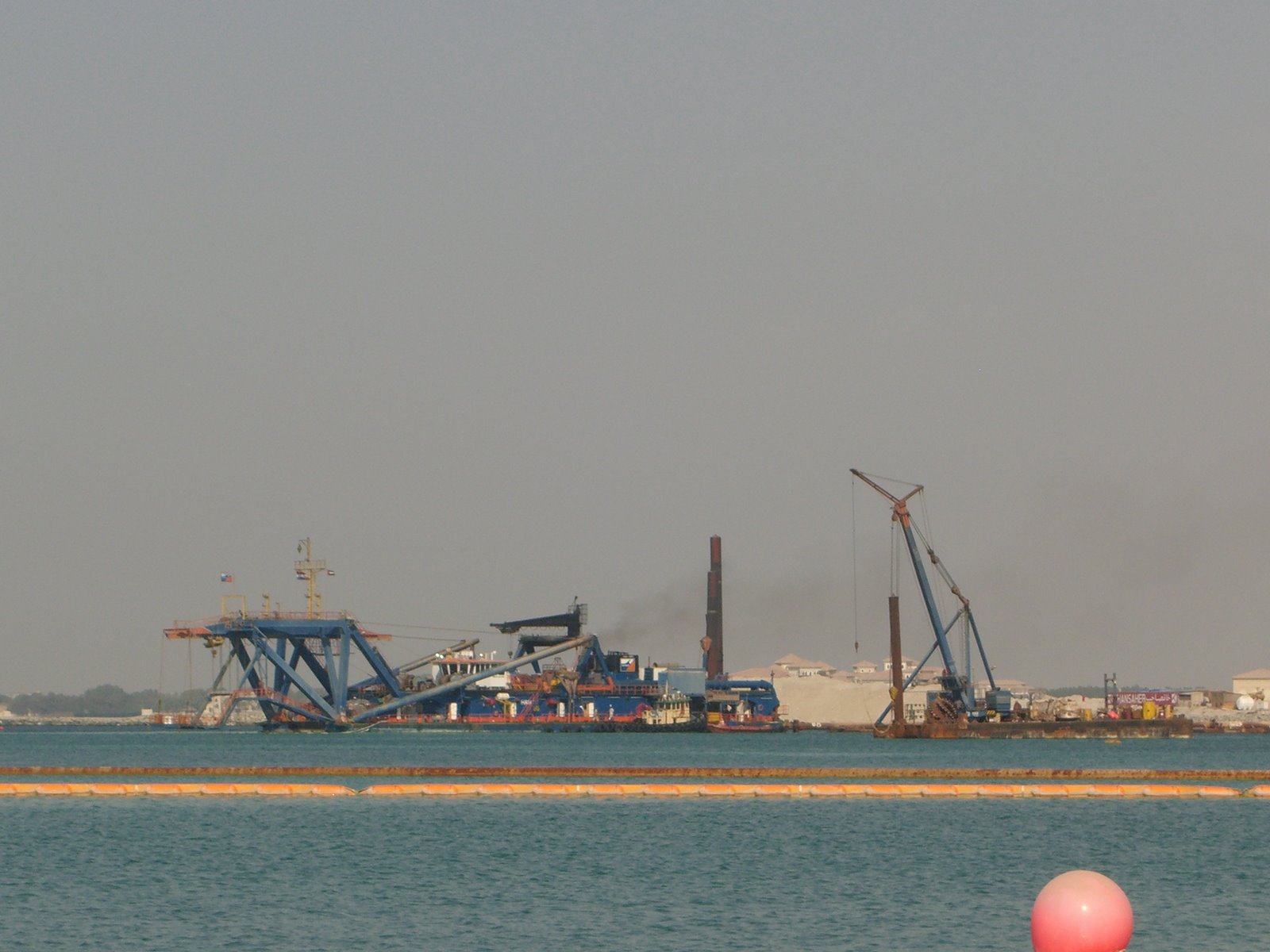
From our apartment on this man-made island, a phrase that still confounds me, I am observing the engineering of a sand pier extension. A workman pulls a prayer rug out of his truck, bends down on his knees, placing his forehead on the ground, facing west toward Mecca, as the muezzin’s call to prayer reverberates throughout the city.
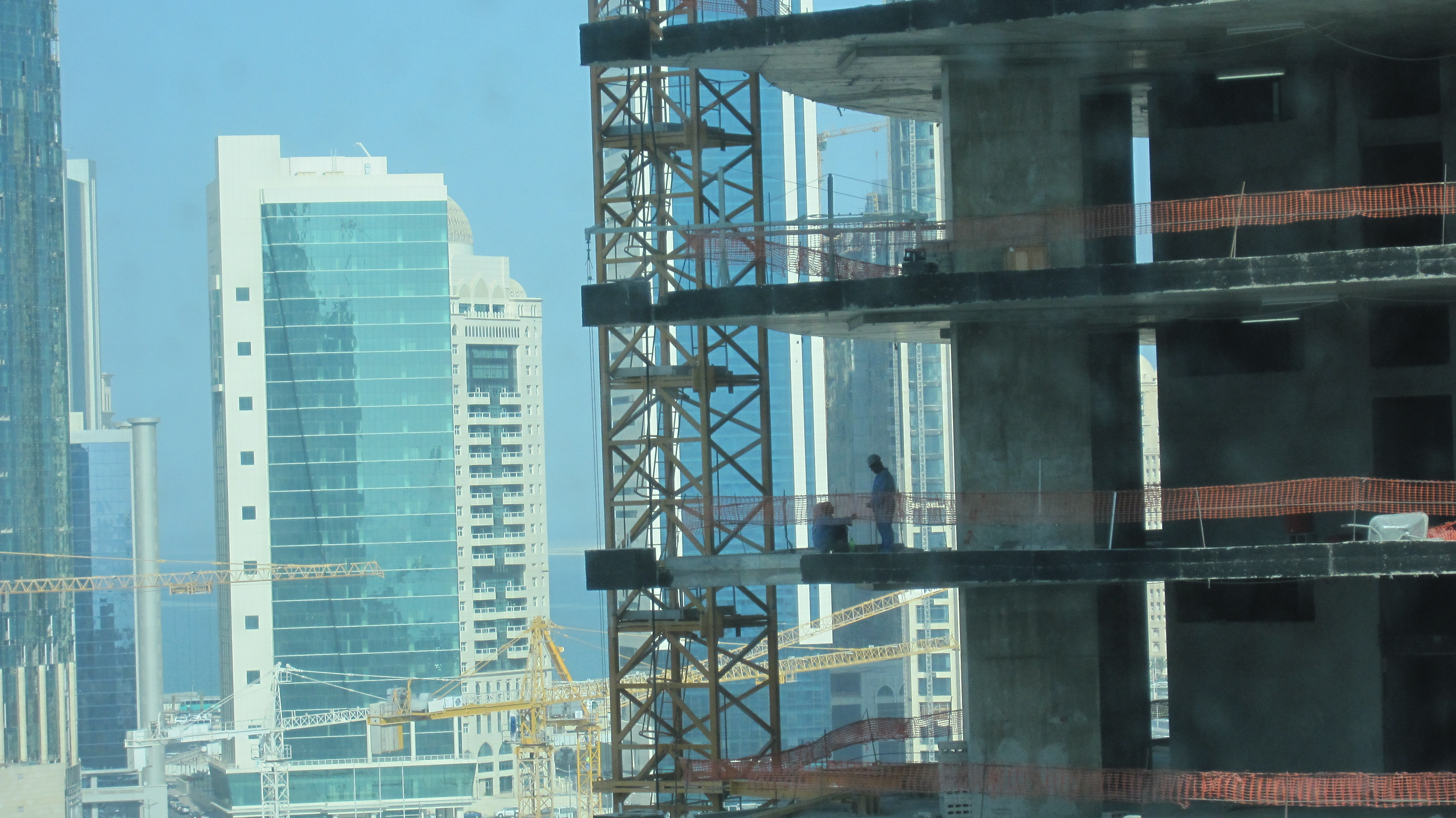
Journal entry, November 2010, Doha, Qatar: From our apartment on the 23rd floor, the city is rising right before our eyes, with the sparkling turquoise Arabian Gulf as a backdrop. Two cranes swing their arms in slow motion, one reaching up 27 floors high, the other hovering at 10 stories.  Wearing blue jumpsuits and yellow or orange construction helmets, laborers are perched on floors without walls. One, with a scarf wrapped around his face to keep out the sand and the sun, is crouching on his heels near the cement foundation, staring into the distance. Nearby several others are erecting a scaffold. Three climb up the poles while one man holds the flimsy structure together. Across a parched patch of sand dotted with a few stiff shrubs, there is a 35-story commercial building nearing completion. A cluster of workmen are sitting on the top floor, dangling their legs over the sides, eating their lunches out of paper bags.
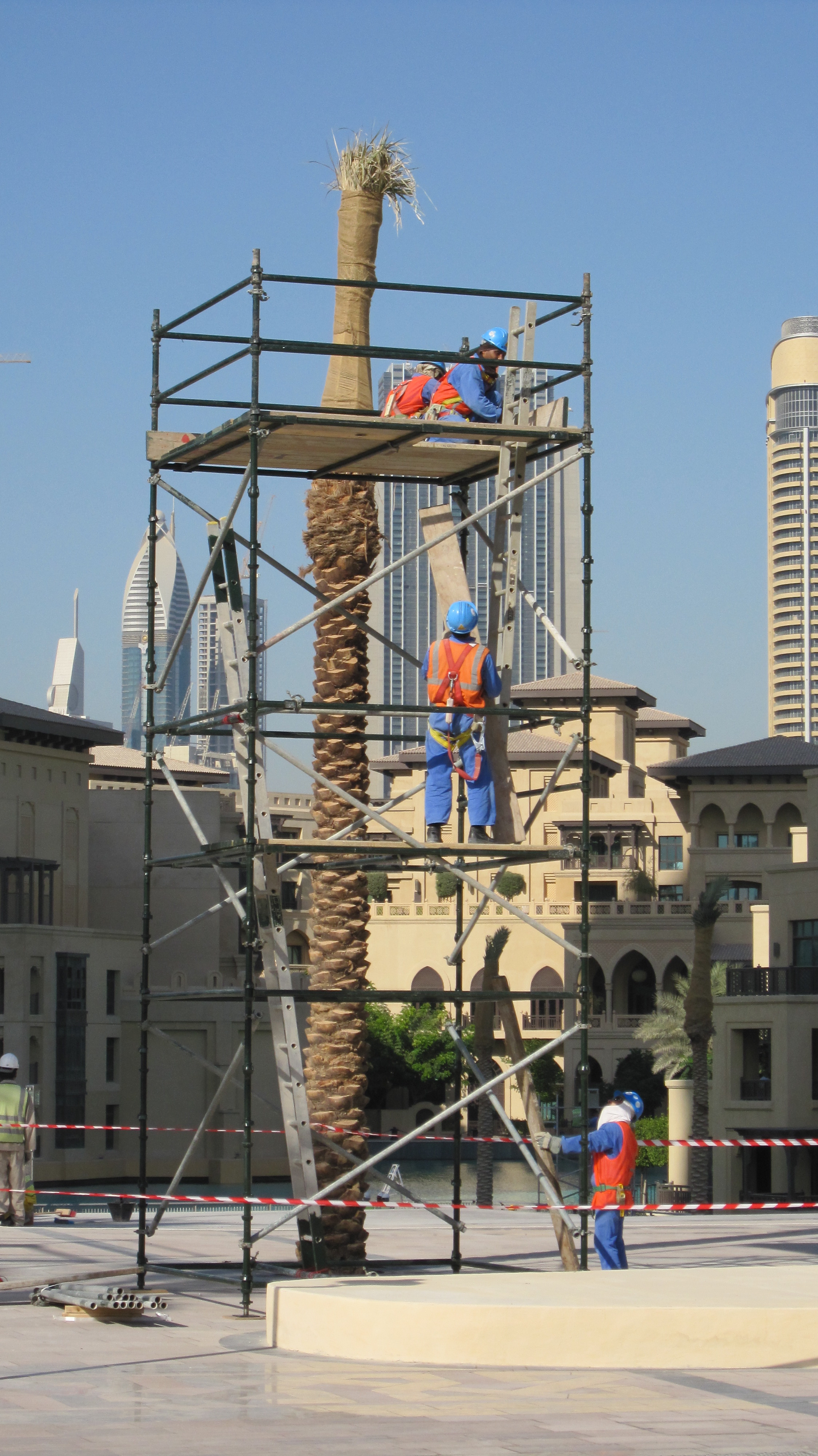
These men, primarily South Asian, are a virtually invisible part of the everyday landscape in Dubai and Doha. Worker bees on machine bees. Human machinery. They are the individuals actually building these cities. I wonder about them. What are their names? What have they left behind? Whom do they love? Who loves them? How do they understand their roles in this massive enterprise, this empire unfolding? How will they tell their stories?

The construction frenzy gets at the heart of certain tensions that I feel here. First, I ask myself why, after being mobile and unencumbered, these Gulf Arabs are now building massive villa compounds and commercial centers that will tie them down to one place?  And at what cost to them? Are they losing their toughness, flexibility and spirit? Their aversion to things fixed and permanent?  Their freedom? On the other hand, it makes sense that the speed with which these buildings are appearing does not disturb them whatsoever.  Wilfred Thesiger spoke of Bedouins as having the ability to wait patiently years and years for certain events to occur, and then to move decisively and quickly. They survive by their cunning and adaptability. I see what he means.
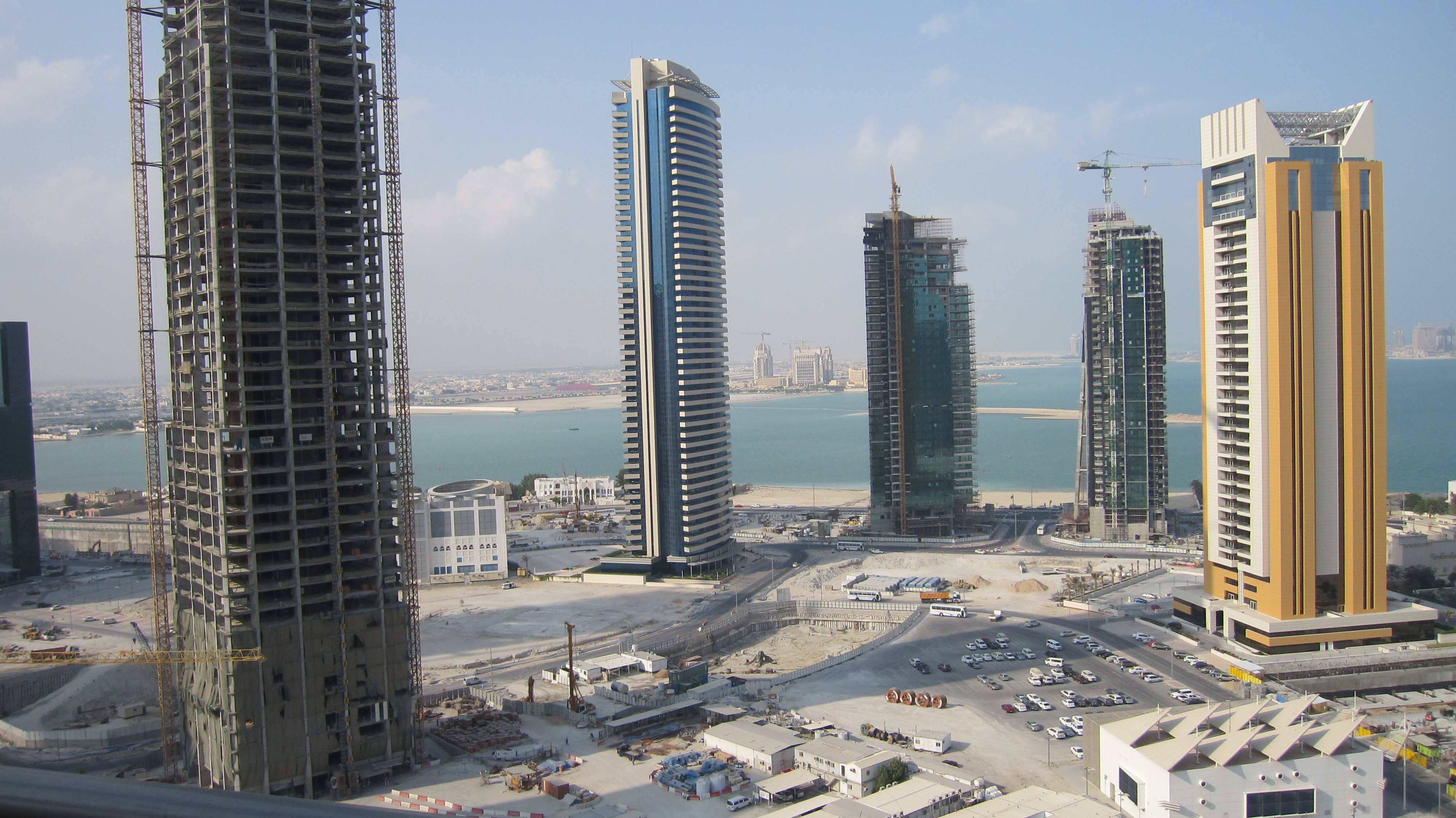
Second, the disparity between the rich and the poor is evident in all big cities, but here it just smacks you in the face all day long. We expats and the nationals go about our easy, comfortable days in air-conditioned spaces, while all around us these “imported” laborers toil in dangerous situations to create the roads, sidewalks, offices, hotels, stores, houses and infrastructure to make this lifestyle possible.

This bothers me. I hope it always will…

“The joke around here is that the crane should be designated as Dubai’s national bird.”

Sheikh Mohammed bin Rasheed al Maktoum

Wall Street Journal  January 12, 2008


What’s In A Name?

“No race in the world prizes lineage so highly as the Arabs and none has kept its blood so pure.”

Wilfred Thesiger, Arabian Sands, 1959

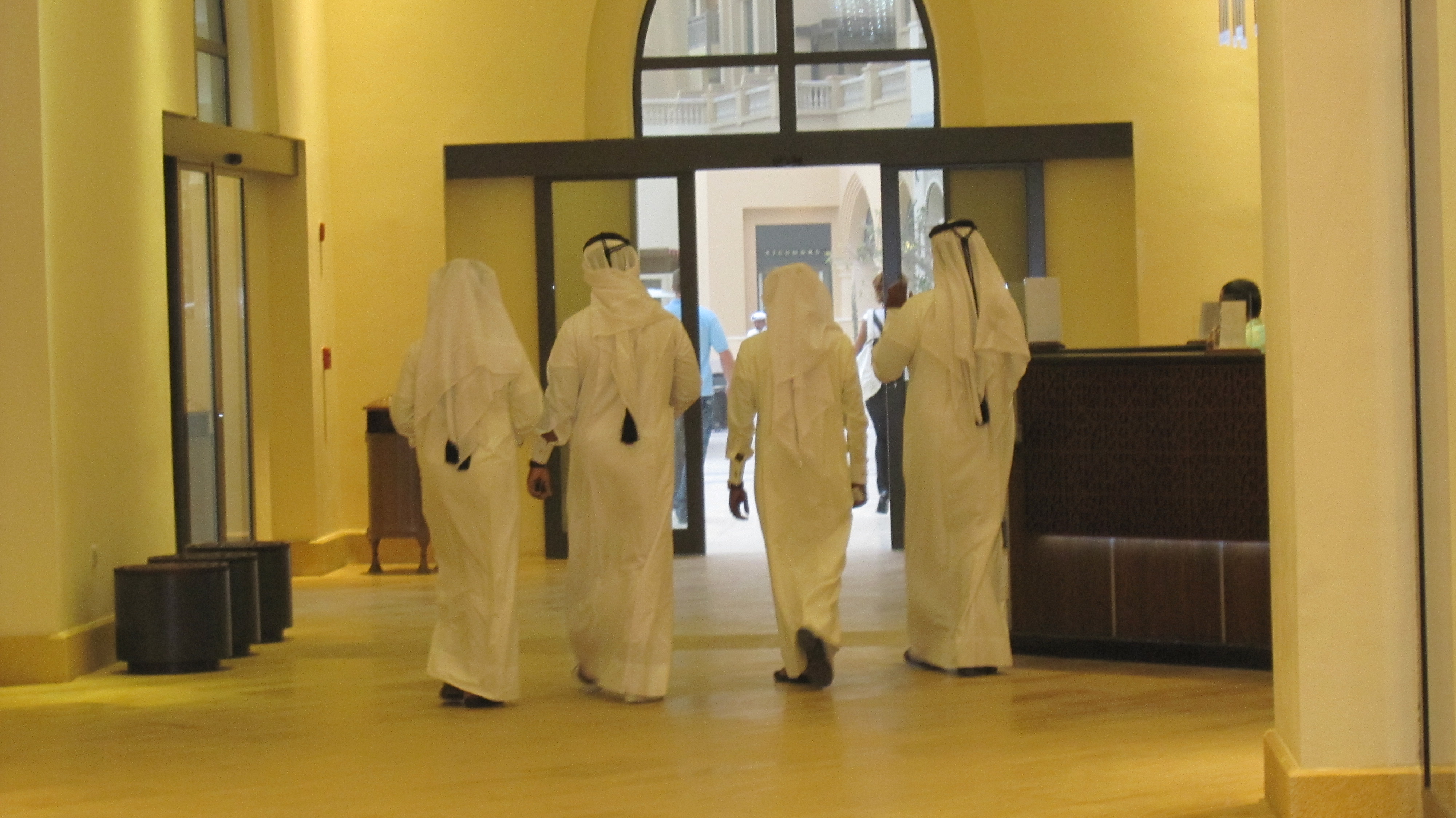
One of the first challenges in arriving in the Middle East is trying to decode and pronounce the long names. It seems rude and lazy to mumble them or to avoid saying them altogether, and worse yet to call people by the wrong names.  When I first started teaching, I was so daunted by the fifteen seemingly identical men in white gowns (thobes) and headscarves  in my class with their complicated names, that I wrote notes to myself about their appearance and my own version of a pronunciation system, so I could sort them out. Saleh: “SAY-luh, with the sharp wit and expressive face”.  Jalal: “Juh-LAL- easy-going manner and  smiling eyes”.  Ahmad: “AH (with a little coughing sound)-med, who asks many questions”.  Fortunately, one only needs to call them by their first names!

I soon learned that there is indeed a pattern to Arabic names.  For men, “bin” ( or “ibn”) following the first name  means “son of” and is followed by the father’s first name, which is then followed by “al” which means “from the family of.” For example, the sheikh of Dubai is Mohammed bin Rashid al Maktoum.  His father was  Rashid bin Saeed al Maktoum.  One of Sheikh Mohammed’s sons is Hamad bin Mohammed al Maktoum. The Qatar “emir,” another term for sheikh used more frequently among Qataris,  is Hamad bin Khalifa al Thani.  His father was  Kahlaifa bin Hamad al Thani. One son of the Emir is Tamin bin Hamad al Thani. There are only a few Arab names. Mohammeds, Khalifas, Thanis, Hamads,  Abdullahs, and Hassams abound. Therefore, this naming system allows one to unravel the puzzle of a person’s lineage. And family is absolutely central in the Arab culture, the key to a person’s identity, the most important of all qualifiers.

It is interesting to note that women keep their father’s family names when they marry. After a woman’s first name is “bint” followed by her father’s first name, then “al” referring to the father’s family name. For example, the third wife of Sheikh Mohammed is Haya bint Hussein. (She is the daughter of the late King Hussein of Jordan.)  The second wife of the Emir of Qatar is Mozah bint Nasser al Missned. This custom means that a couple never has the same family/last name, unless they are cousins, a common arrangement in royal families, which makes things even more confusing! A child never takes on his mother’s family name. In fact, it is impossible to determine who the mother of any individual is in the Arab world unless you are a personal acquaintance or it is a famous, usually royal, family who has made its records public, which is rare. Thus, you will not be able to identify the mother of any individual.

At first, I found this strange, but I quickly realized I was over-simplifying, tangled up in cultural nuances and assumption. Many women in the United States keep their so-called maiden names and give their children either hyphenated last names or only their husbands’ names. In other words, they are joining what is called the patrilineal genealogical structure of Asia and the Middle East, where there are no recorded birth lines to the mother’s family. It is easy to get trapped into dualistic thinking. “They do it that way in the East. We do it this way in the West.” The lines are blurred. And there is no one right way.

Next post: Construction in a Caravan Culture

Pausing at a Crossroads


 “…the secret mysterious life of the East flows on- a life into which no European can penetrate, whose standards, whose canons, are so different from his own that the whole existence they rule seems to him misty and unreal, incomprehensible…” Gertrude Bell, 1894

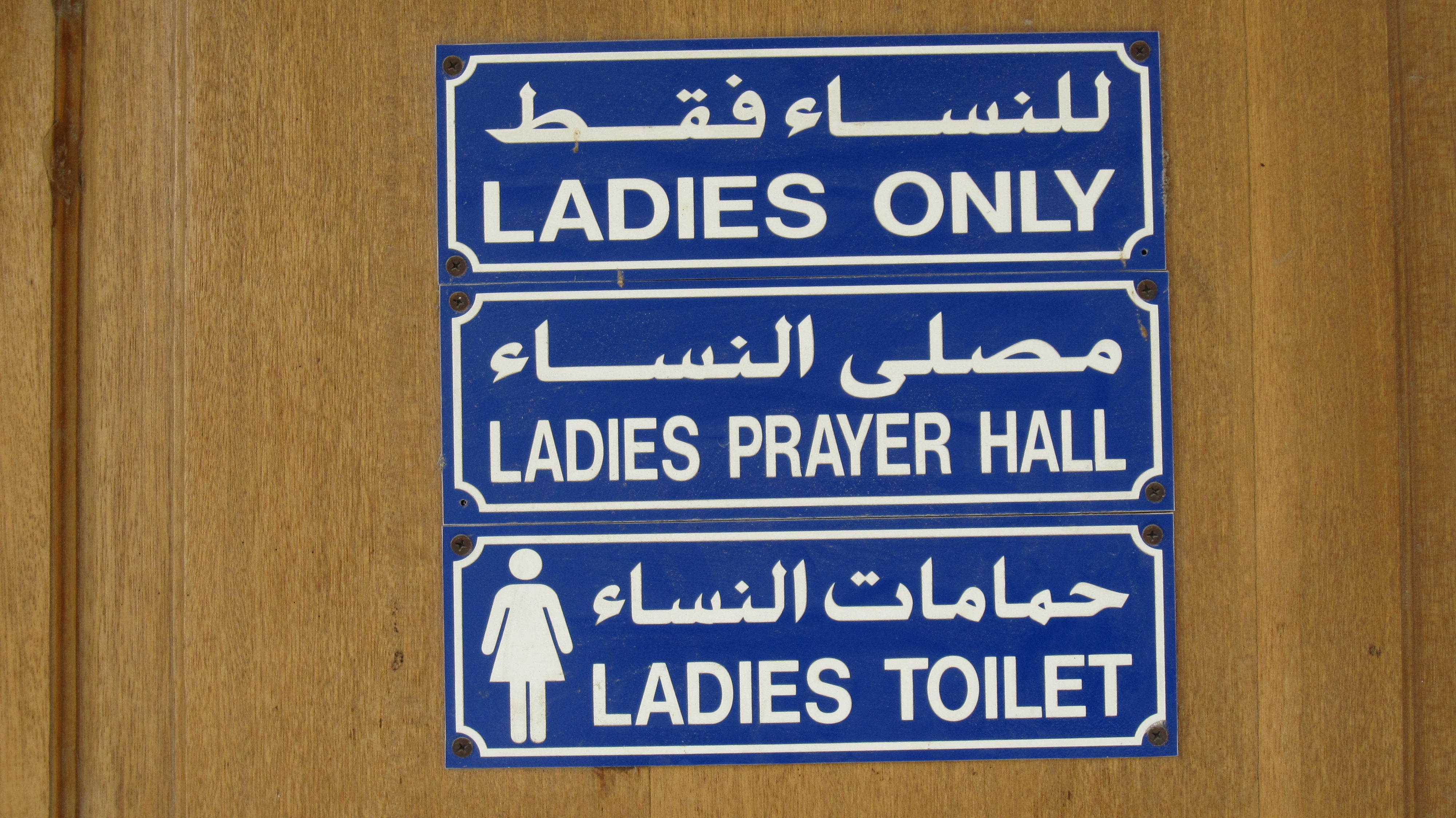
I am in the airport in Dubai, an intersection of many cultures. It is 12:10 p.m. The stirring chant of a muezzin’s Call to Prayer is reverberating in Arabic on loud speakers throughout the airport. “God is greatest. There is no God except God….” This Call occurs five or six times a day throughout the Muslim world. The exact times depend on the movement of the sun and are noted in the local newspapers each morning: just before dawn (Fajr) and again at sunrise (Shorooq), which counts as one prayer session, then  noon (Zuhr), afternoon (Asr), sunset (Maghreb) and night (Isha). I have come to enjoy this invitation to pause and reflect. Devout Muslims carry their prayer rugs with them, praying wherever they are, or they enter a mosque, removing their shoes and washing their feet first, with men and women going to separate spaces. There are Prayer Rooms in all malls, theaters, museums, and other public places. Hotel rooms have arrows on their ceilings pointing toward Mecca, the direction in which they pray. Some Arabs are secular, and just go about business as usual during the Call to Prayer. The chant ends, and the loudspeakers revert to easy-listening Western Music –specifically “All I Ask Of You” from “Phantom of the Opera”.  Such are the jarring disconnects that occur here. From the foreign to the familiar, the exotic to the ordinary.

The airport is sparkling clean, gleaming with glass and steel and modern gadgets. Laborers bustle about polishing the waste cans, sweeping the ramps alongside escalators, dusting all surfaces. Two South Asian women perched on a counter in the bathroom explain how to work the remote control hand-wave toilet flushers. An East Asian man drives a high-tech floor-mopping vehicle.  Behind me, new employees for Emirates Airlines, all women from the Philippines, are having a training session- in English. Where are the local workers? In fact, there are no Emiratis in menial jobs.  Emiratis  (like Qataris) comprise a mere 20% of the population in their home country and hold only “white collar” positions, mostly subsidized by the government.  In the airport, they are the ones who drift about, elegant and aloof, serving as security officials or in passport control. There are reports that Emiratis and Qataris have recently been given raises of 60% and over to keep them content during the unrest of the Arab Spring.

The juxtaposition of East and West is especially striking here, the first exposure to the Middle East for many travelers. Although at first glance, you could be in Paris or Chicago or any international airport, the scent of cardamom in the coffee, the sound of the muezzin, and the sight of Arabs in their Muslim gowns evoke the same sense of mystery that so enchanted the great Middle Eastern scholar and explorer, Gertrude Bell, in 1894.


Next Post:

What’s In A Name?

Post Navigation